Comminges in the Middle Ages
The County of Comminges
In the Middle Ages, Comminges formed a powerful and relatively autonomous county, centered around the town of Saint-Bertrand-de-Comminges.
The county’s origin dates back to between the 9th and 10th centuries. After the fall of the Carolingian Empire, the region was structured around a feudal county: the County of Comminges.
The territory largely corresponds to the ancient Gallo-Roman city of Lugdunum Convenarum (present-day Saint-Bertrand).
Local noble families gradually took control of the territory.
The power of the Frankish kings was distant: the counts governed almost independently.
Comminges held a strategic position, bordering the Pyrenees and Spain, and on trade routes between Toulouse and Aragon.
The dynasty of the Counts of Comminges dominated the region for several centuries.
Among the most important were Bernard IV of Comminges (12th century), who participated in feudal struggles in the South and strengthened comital authority, and Bernard V of Comminges, who was involved in rivalries between major southern families.
The counts constantly had to negotiate with powerful neighbors: the Counts of Toulouse, the Kings of Aragon, and the Gascon lords.
Changes in Comminges following the Albigensian Crusade in the 13th century.
The territory was less affected than central Languedoc but remained involved. The counts tried to balance their relations between the crusaders from the north and the great Occitan families.
After the crusade, French royal power gradually expanded in the south, and the autonomy of the smaller counties diminished.
Medieval Comminges society was typically feudal, with the nobility, who owned castles in the Pyrenean valleys, remaining loyal to the count. The clergy, including the bishopric of Saint-Bertrand-de-Comminges, played a central role. Religious influence grew, and pilgrimages multiplied. Peasants developed agriculture, particularly in the mountains, livestock farming, and forestry.
Villages were often organized around a church, a castle, or a feudal motte.
Several factors weakened the county:
- demographic crises (Black Death)
- economic difficulties
- gradual extinction of the dynasty.
In 1454, Comminges was attached to the French crown under the reign of Charles VII.
It then became a province integrated into the kingdom, while retaining a strong regional identity.
In our region, there are three former county towns whose remains from that era can still be seen in their town centers: Saint-Marcet, Aurignac, and L’Isle-en-Dodon. Each of these towns had its own castle; remains can still be found in Aurignac and Saint-Marcet, while in L’Isle-en-Dodon, only a section of the castle wall is visible on Rue Maubec.
The Great Medieval Castles of Comminges
Saint-Marcet Castle
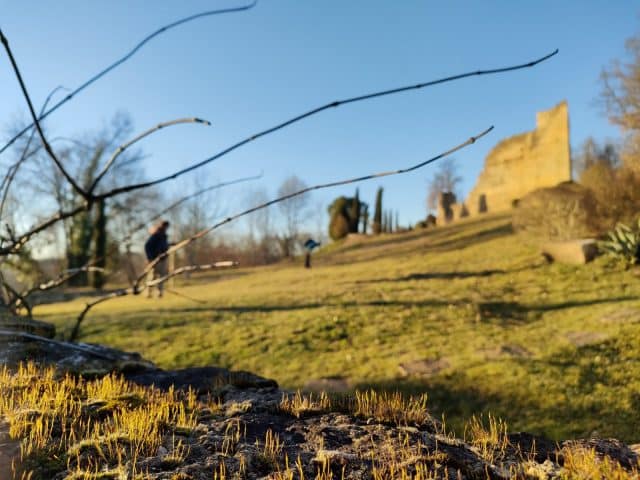
The Saint-Marcet Castle is one of the important castle sites in Comminges.
Sa fonction est le contrôle d’un territoire agricole et d’axes locaux.
Le propriétaire actuel du château a passé une grande partie de sa vie à rénover le site, qui est privé. Dans son aspect, tel qu’on le voit aujourd’hui, bien qu’en partie en ruines, on peut encore comprendre l’organisation d’un château médiéval de la région.
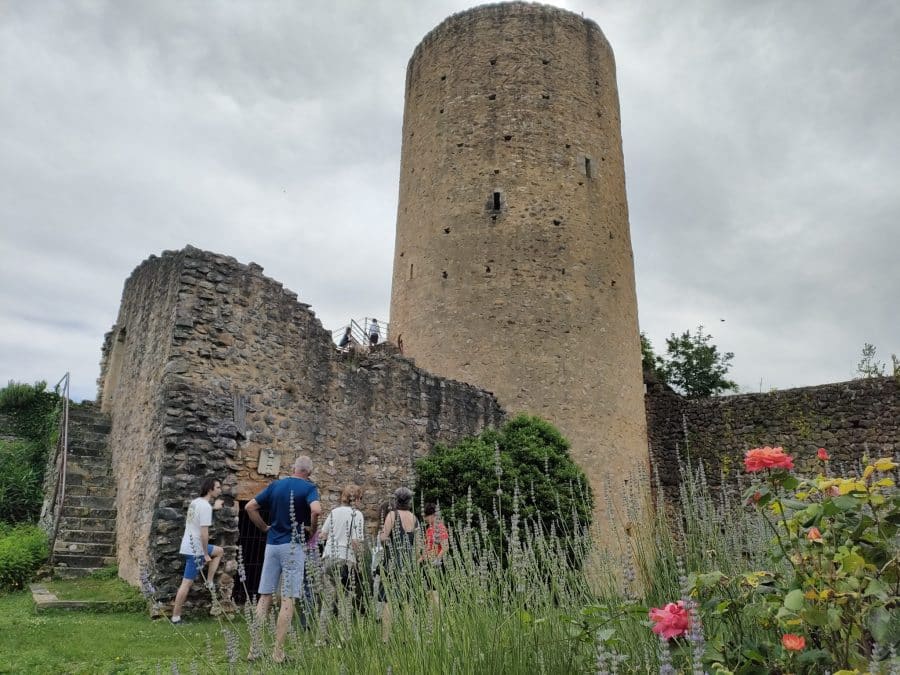
Aurignac Castle
Surrounded by walls 1.5m to 2m thick, it forms a rectangular enclosure when the northeast part, where the Count’s lodging was located, is added. The ramparts are reinforced by four solid cylindrical corner towers, formerly crowned with battlements. The keep was an uncovered watchtower; it is now the only building from that era still standing. It is accessed by a staircase and the original door. This This enormous, slightly truncated building rises to a height of 18 m, with an external diameter of 9.25 m at the base and 8.25 m at the top. It comprises three superimposed rooms. Access is via a narrow spiral staircase built into the thickness of the walls, between two concentric towers.
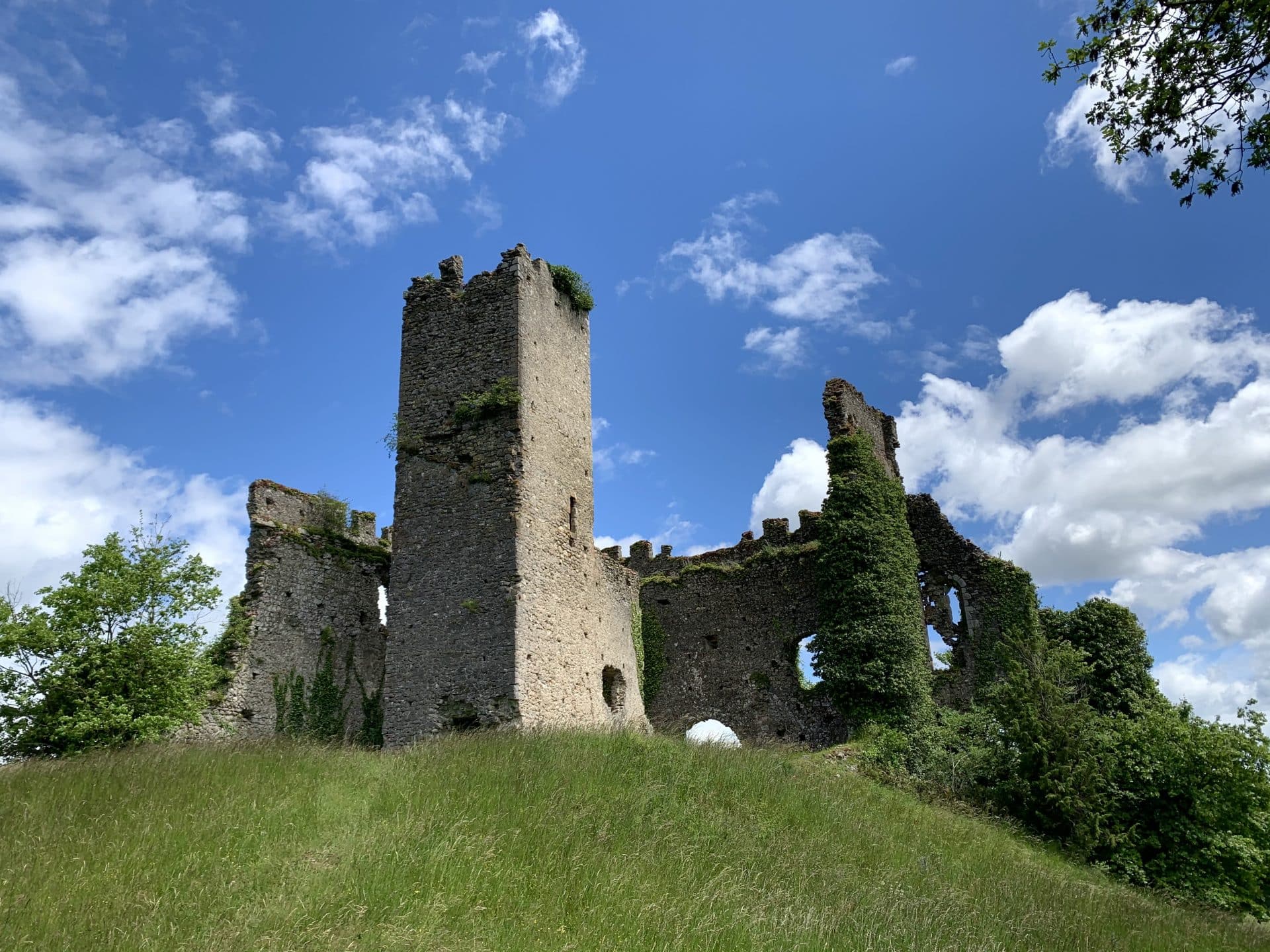
Montespan Castle
The ruins show its medieval role, both as a strategic surveillance post and protection for routes between Saint-Gaudens and the Pyrenean valleys.
Construit vers le XIIIe siècle, il appartenait à une puissante famille locale les Montespan dont la marquise de Montespan a laissé son empreinte dans l’Histoire.
Aujourd’hui, le site offre un panorama sur le Comminges.
Other medieval remains in Comminges: religious heritage
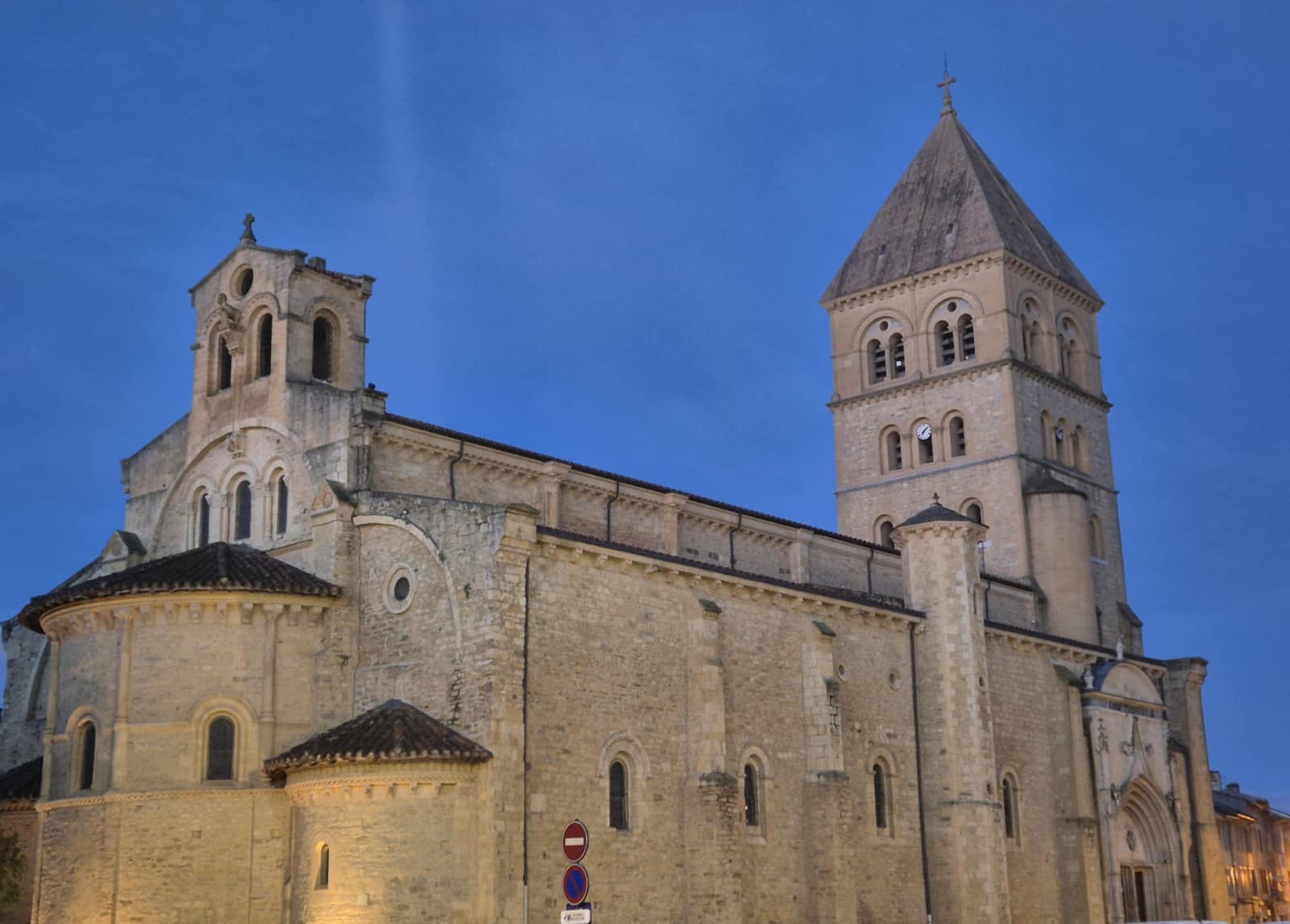
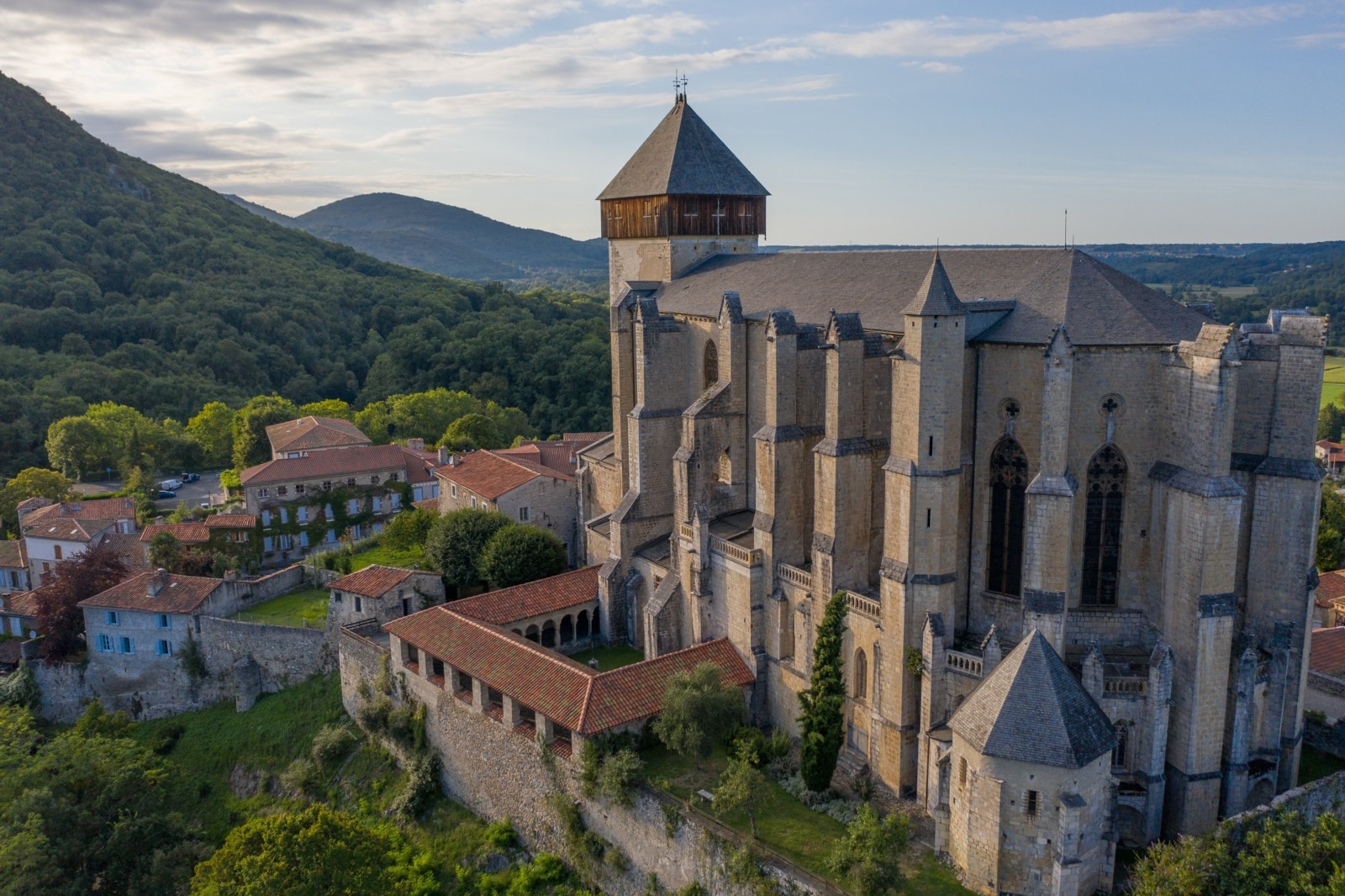
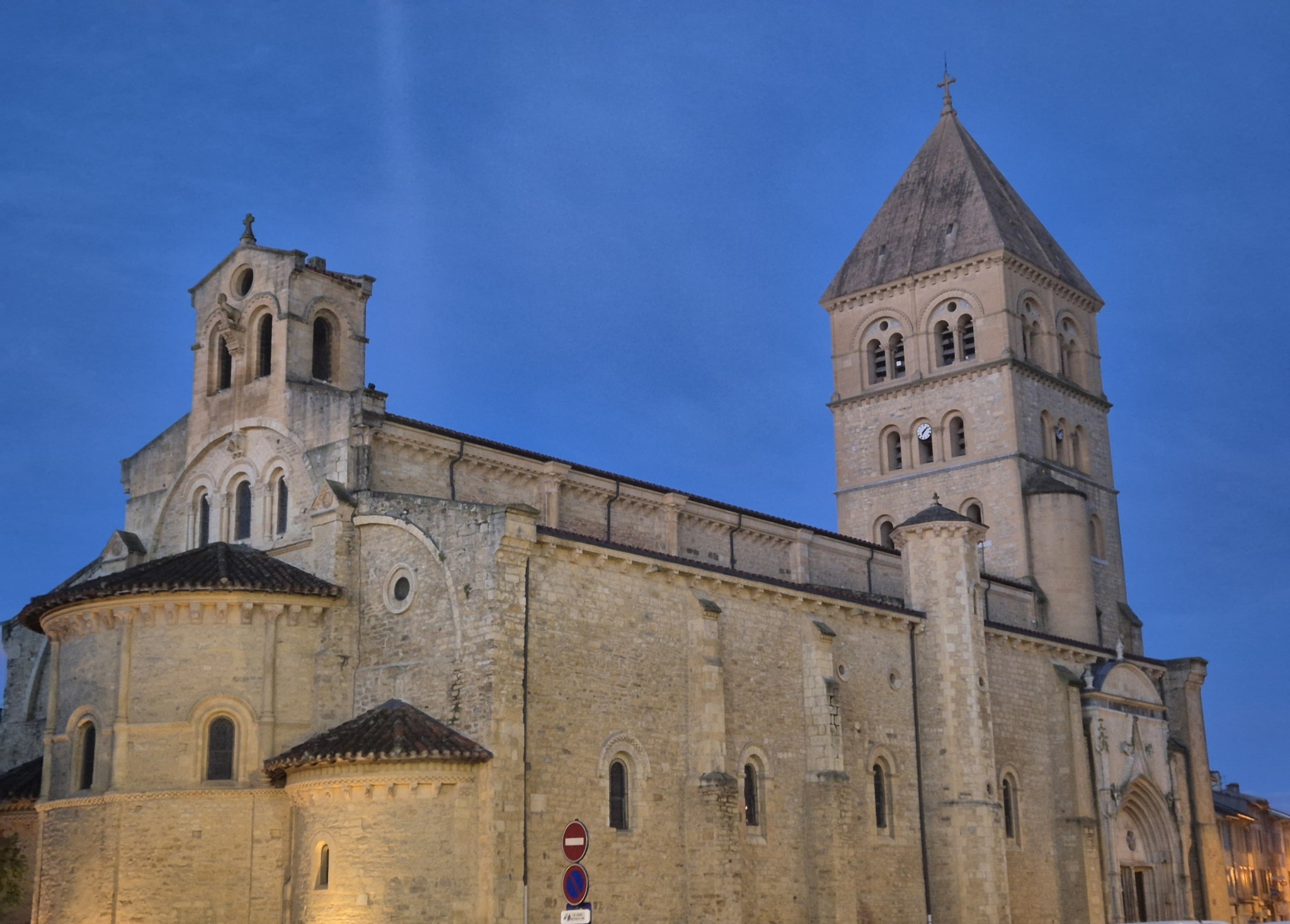
Many small villages have churches dating back to the Middle Ages, such as Aurignac, L’Isle-en-Dodon, Boulogne-sur-Gesse, Saint-Marcet, and many others. Notable examples include the majestic Collegiate Church of Saint-Pierre in Saint-Gaudens, the Cathedral of Sainte-Marie in Saint-Bertrand-de-Comminges, and the Basilica of Saint-Just in Valcabrère. Former convents, monasteries, and abbeys, such as Bonnefont Abbey, can also be seen, as well as the former bishops’ palace in Alan—a whole heritage that tells the story of the Comminges region during this period.